
I’ve been trying to write parts of this for twenty years, but it meant waiting for people I love to die.
At the time, I had my reasons.
They were, roughly:
I didn’t want to expose people untrained on the internet to a potentially hostile foreign audience.
I don’t believe in seducing readers into sympathy with people with whom they ideologically disagree.
I wasn’t “wise” enough yet. (I thought that would come.)
Prudence.
Fraudulence.
Cowardice. (Also courtesy).
Most Americans had a surprisingly hard time talking or thinking about Chile without getting sidetracked into talking and thinking about the United States instead.
I felt a strong urge to condescend to the mothers I knew. As a college-educated young woman mostly raised in the liberated, feministish United States, I had an almost tumescent need to feel above them. And I felt generally invited to do just that by the post-feminist careerism of the late nineties. But:
I didn’t know what it was like to be a mother. They did know what it was like to be a non-mother. I didn’t much care for that imbalance. Moreover,
It was irksomely clear that many of the very mothers I most wanted to look down in my immediate vicinity were at least as smart or smarter than me. And yet—and this drove me batty—they didn’t mind people thinking otherwise. Sometimes they even played dumb on purpose. As a Gifted and Talented Egotist, I found this baffling. Mysterious.
Three Lilianas, three Fernandos, two Florindas and three Raquels create writing problems. My “add a fourth Liliana” strategy didn’t solve them.
The one and only time a relative read something I published about them—a treacherous piece, in which I was experimenting with humor, on the theory that comedy requires cruelty—I felt guilty, remorseful, but above all, confused. The thing is, it didn’t go badly. It went weirdly. They were pleased as punch and praised me for a piece so different from what I actually wrote that I wasn’t sure whether they or I or both of us had lost our minds. I spent a decade trembling at the memory of that telephone call and I still haven’t fully recovered. Wrote an essay about the whole experience sixteen years ago and buried it in a drawer.
For years, I preferred literary constipation to the alternative. Sure, I was full to bursting. But letting loose would have a cost. And not just to those I wanted to write about. I knew it would deal my ego, specifically, a blow or two, as writing stuff close to the bone tends to do if one fancies oneself an ethical person. Talking about people is, as my twins say, Not Kind.
Time doesn’t sap moral ambition, but middle age does batter the guardrails a bit. It also dulls the more delusional forms of self-regard. In my youth, it would have mortified me to admit how flawed I am. Now? The thing I can’t afford is vanity. I can grant that I have some good qualities. I try, sometimes very hard. I love my big, sprawling, funny, wild, opinionated, aspirational, repressed, sometimes delusional, generous, gossipy, scandalous, sagacious, intemperate, heretical family desperately. I think about my relatives, especially the dead ones, far more than is reasonable. I’d do a lot for the ones I have left. But my need to dig into a juicy story—into the kinds of copuchas my relatives have always told, in fact, over dinner tables and at parties and teas but also in hundreds of letters sent during the sixty years they spent apart—feels beagle-like. Instinctive. I primly judged them (and the gossip) for decades. But I’m too old and tired to keep fighting my true nature.
Far too many photographs. No publisher would ever want to print such a thing.
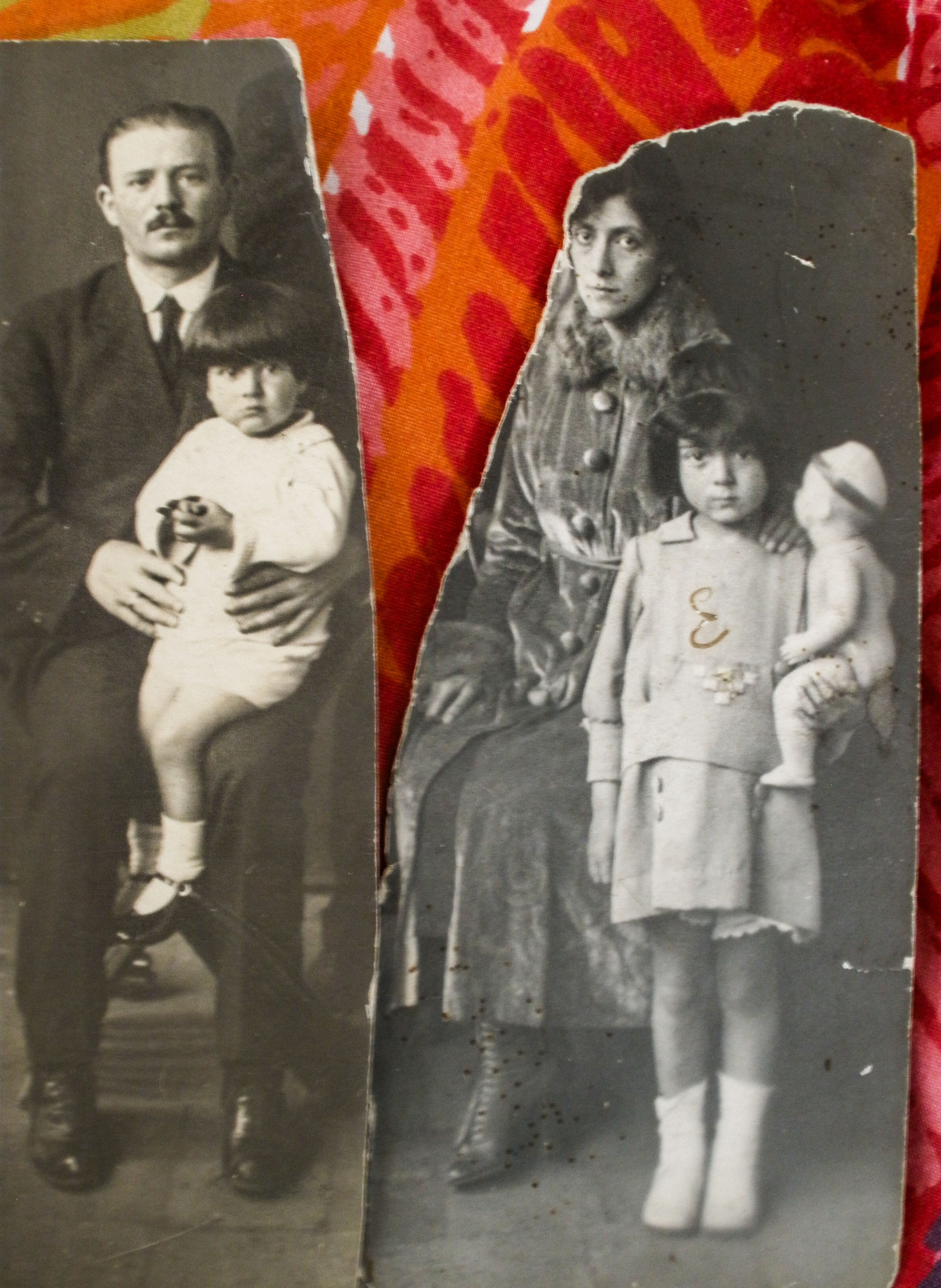
To these good and sensible reasons for waiting, I’ll add the best reason of all (though I didn’t know it at the time): namely, that the United States—like Chile, where most of my family still lives—would undergo its own process of extreme political polarization. And, also like Chile, watch nearly half its population slowly but definitively embrace authoritarianism. The parallels are far from exact, but on this particular 11 de septiembre, I’d describe them as certainly … generative.
But anyway. At first, I was waiting for some people to die.
Now some of them have. And I have learned, with horror and grief, that it solves nothing. It just means the witnesses you sought meaning with—and from—are no longer there. They weren’t merely your subjects. They were secretly (you hoped) your readers too, and without them, the reasons to write begin to fade. So, you realize, will you.
Now all that time has piled up and kinked the thing.
I was twenty when I started a version of this project. In love. Careerist. And getting more and more skeptical about whether it was actually possible, as everyone kept insisting, to have it all.
Being a stickler for case studies, I lasered in on my grandparents’ marriage. It was the only example in my family of a union between “equals,” professionally speaking. I wanted to take it to the lab, put it under the microscope, and extract some lessons.
For two reasons: My grandmother and I were extremely close. I wanted to understand her life. But also: Her marriage had become a pretty formative horror story.
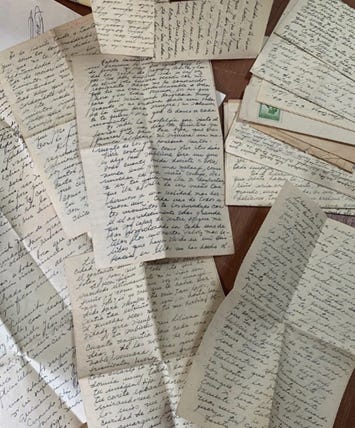
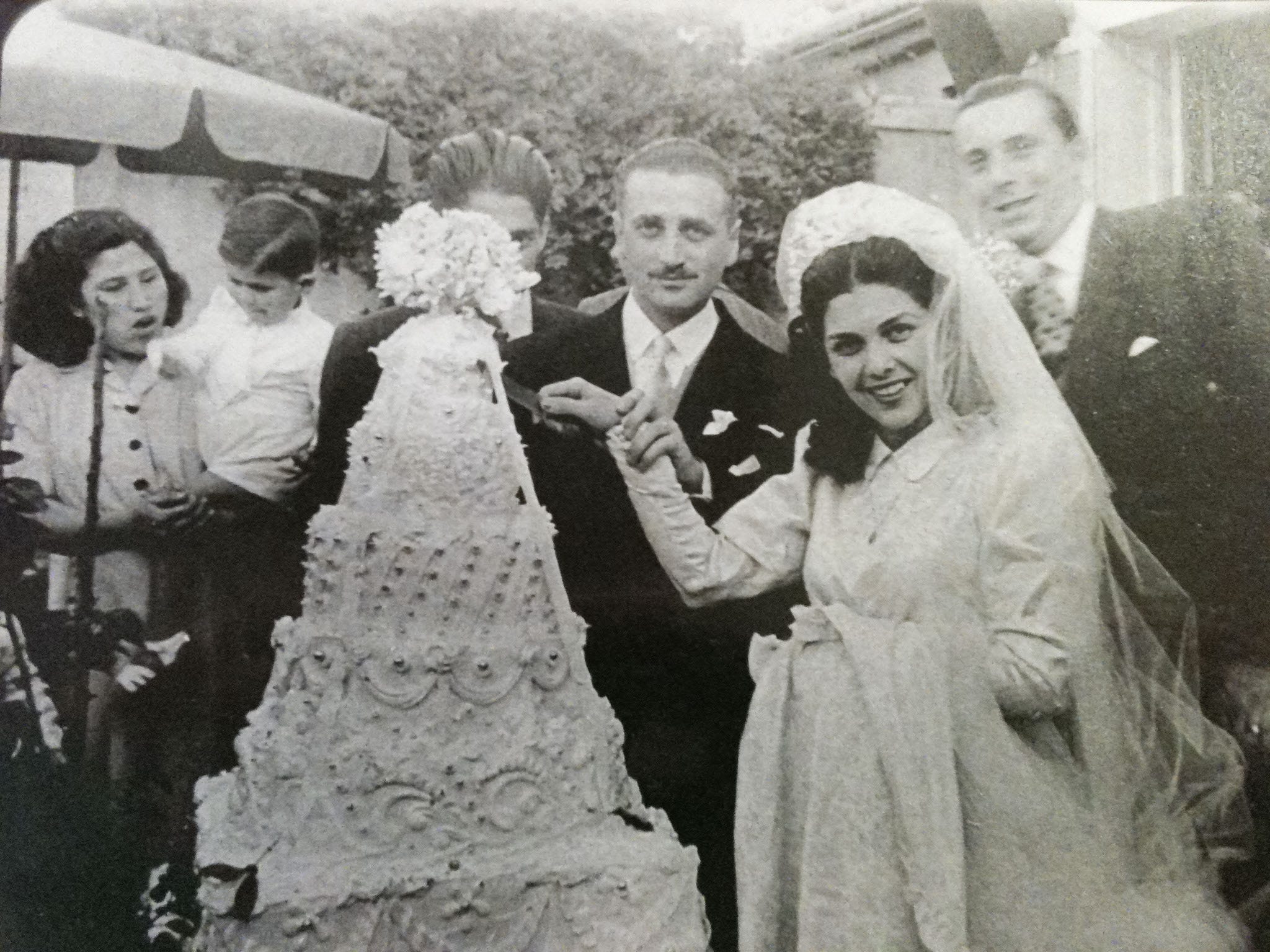
Lala and Fernando met in law school at Pontificia Universidad Catolica in 1942. She was one of five women in her law school class. Many of the men were smitten with her. She picked him. He was obsessed. There were love letters. So. Many. Letters. He didn’t quite write her daily, but this is a tiny percentage:
They were happy. They were beautiful. And five years of fervent courtship ended at the wedding. By which I mean, the literal ceremony. After the reception, he basically never spoke to her again. No one understood why; not even him.
It was a riddle I desperately needed to solve. I felt, somehow—and I knew and hated how irrational I was for feeling such a thing—like their story was a trap I was going to fall into myself unless I figured out what it was, and how to avoid it.
I asked everyone in my family about it, one by one. Multiple times. What do you think went wrong? What happened? Did he say anything? Did she? Did anyone?
What I got, instead of an answer, was speculation, gossip, confessions and camaraderie. The thing about failed love—especially someone else’s—is that it gets people thinking and talking more freely than they otherwise might. In the wake of my own incomprehensible divorce, one aunt ended up telling me how she discovered her own husband had cheated on her. “So I started working where his lovers did,” she said, laughing, and her eyes looked like flint.
There was the aunt who spent every afternoon staking out the house where her husband’s lover lived—watching the two of them have onces (tea) from behind a tree until the neighbor across the street started inviting her in. There was the self-proclaimed sexologist. The aunt who left one brother to marry the other one. The aunt who dressed her seven sons, all geniuses, in identical homemade overalls—and reacted to the swanky new dining set her husband surprised her with by wordlessly locking up the comedor, forever. (She was also, as it happens, the first female engineer in South America. Her name was Justicia Espada. Justice Sword.)
You’ve heard of mission creep? My mission crept. The case of love gone wrong I wanted to solve as a college kid, after grubbily panning it for feminist lessons—smugly, from above—lies suspended in the much bigger and more interesting mess a fortysomething is presently trying to organize into whatever this is.
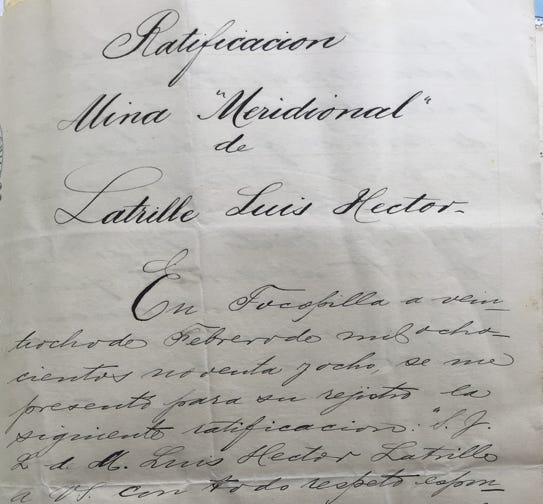
And boy, is it a mess. I have hard drives stuffed with recorded conversations. Thousands of photographs. So much paper. Envelopes. Folders. Boxes. Stamps. Deeds to old mines. Old greeting cards. Literal treasure maps.
I’m afraid the twenty-year-old thought she was a theorist. Or a writer. Or a detective. In hindsight, her medium was more like amber, with its miraculous but arbitrary preservations. Plus, the thing about history is you eventually wind up stuck in it.
I don’t want to get too snooty at my annoying younger self. She was basically right to poke around. There were discrepancies in the family stores, and truths half-told. Too many different versions of things. The stuff of high drama. She collected and documented and recorded and photographed every remotely relevant artifact that crossed her path, from plastic eyeglasses to ancient report cards to mash notes from the dictator’s sister to cracked flowerpots, trying to trap the present and pin down the past for an eventual perfect analysis. She traveled from California to Chile and back over and over and collected testimonies, no matter how trivial. The story of how, when my Tia Rosy was young, she had to share a single towel with her three brothers, and how gross the towel got by the time it was her turn to shower. Also how clearly she—Rosy—remembers seeing her mother Elisa’s diaphragm just sitting there in the medicine cabinet. How, as the only girl, she kept trying to pee standing up.
I have my Tio Alfredo’s selfies with a handsome lover he kept secret (Chile wasn’t exactly friendly to gay men in the 1970s). I have the letter in which his father, my grandfather Fernando, disowns him from Uruguay, where he would spend a decade or so hiding from—I believe—the Interpol.
Records, you say? Oh, I have records.
I have, for example, my great-uncle Jaime’s high school report card from 1944. Useful! I also have my great-great-grandfather Maximo’s grades from 1848, when he attended a mining school in France in 1848 before moving with his brother Domingo to Chile, where they founded the town of Tocopilla. I even have the made-up grades my mother assigned her dolls—in a gradebook she fastened out of an old notebook—when she was seven, playing teacher. (The ones she flunked are in red.)


This is magpie sickness. It would be a mistake to say the twenty-year-old didn’t realize it. But she failed to really factor in that she was subject to time too. I am here now, looking back at all the future pain she tried to protect me from by collecting everything, and cursing a little at her unwisdom.
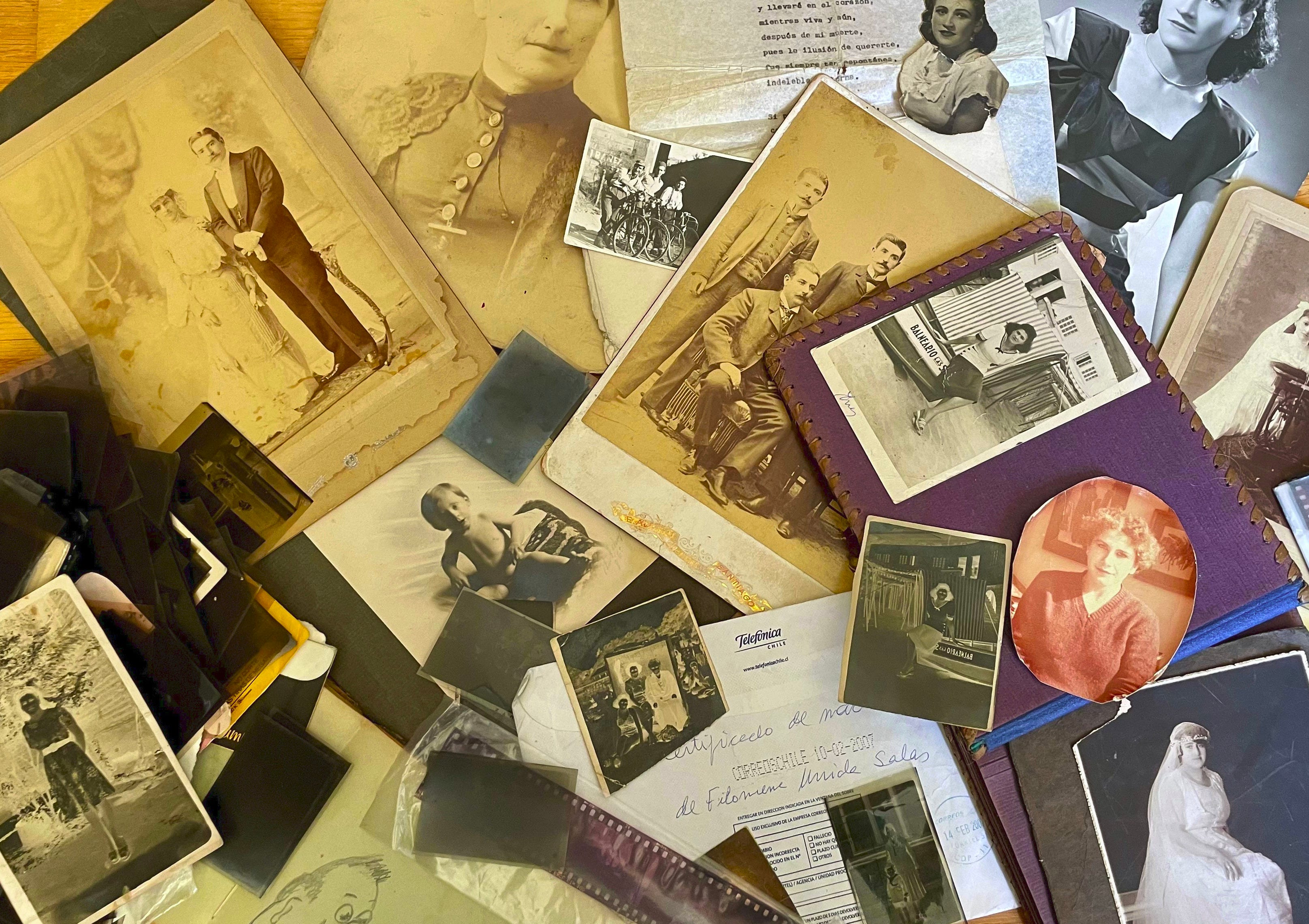
I’ve tried to correct for these errors by being more deliberative, less of a maximalist. It didn’t work. For one thing, I’m too old to embark on ambitious self-corrections. For another, I’ve been wrong so many times: Not about what to preserve (everything), but how. And, especially, why.
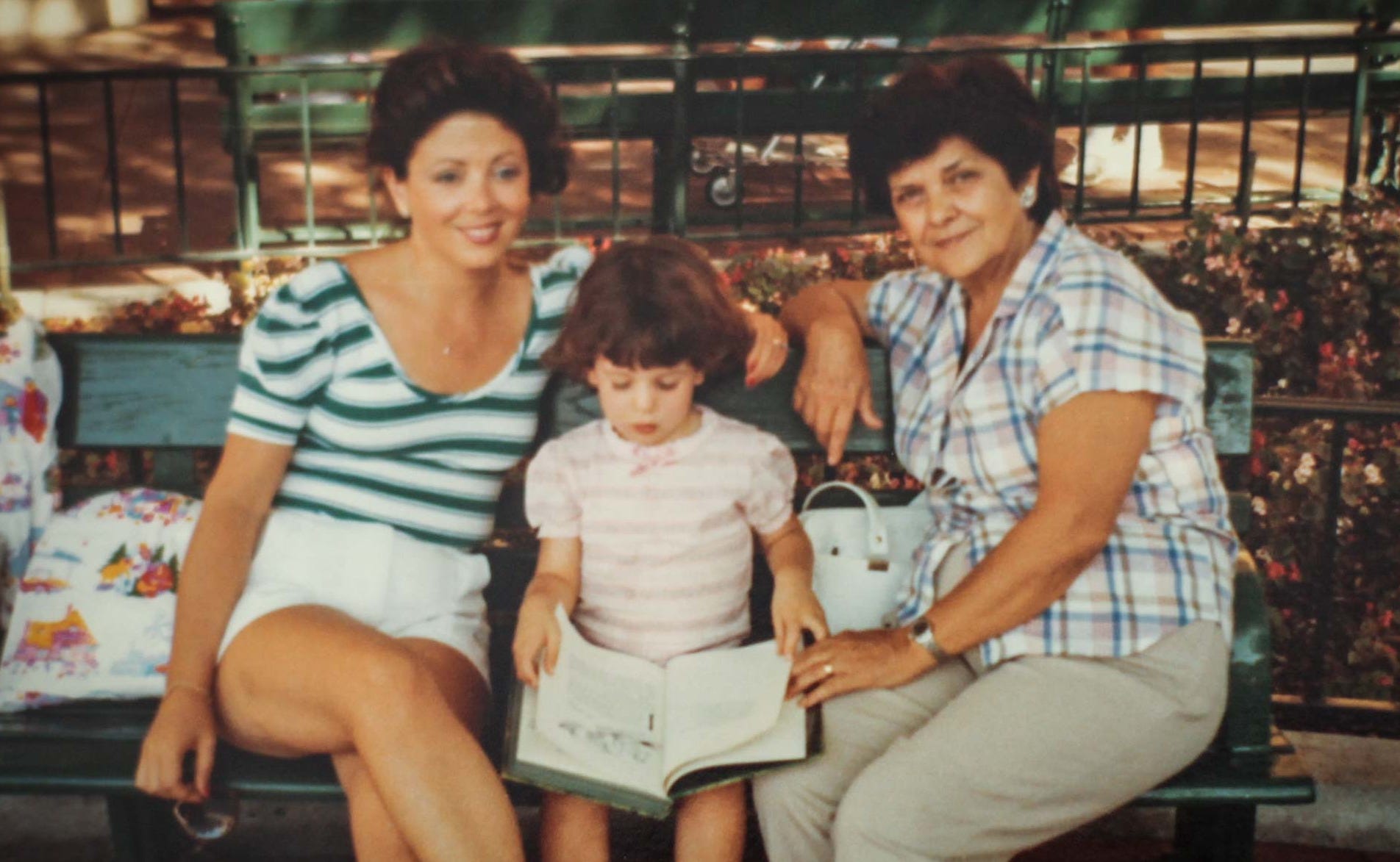
It is 2026. My office is piles and piles of old paper. I am in a race with the rate of things (and me, and the American empire) crumbling.
I have thought of two ways of starting this.
This is the second one. Maybe I’ll try the first tomorrow.
Wait, you have twins? Us too! But enough about me (ish).
Lili, you are a brilliant writer. We lost touch about 15 years ago, but you randomly popped back into my consciousness shortly before the big WaPo layoffs, when I was on some dictionary website looking up the word "stultify" while writing a work email that absolutely did not need the word "stultify" in it...
(don't you love that word? clearly you do. You also love lots of other words that I find myself having to look up while reading your writing, and the only thing I can say about that is, never change!!)
...and came face to face with a quote from some piece you wrote in the Washington Post. Wow!
The last time I saw you was at the ranch. I remember your kid sister sitting at the dinner table, bravely sallying forth against the "nihilism" of the man sitting next to her. And I remember our dear old host, mischievously asking you how things were going at "Berserkly". Don't remember your response, but I seem to remember you taking it in stride, LOL.
But if I go way back into the archives, I also remember a particular conversation we had back at ol' SC...the compassion you showed for the person we were discussing accidentally threw my lack thereof into sharp relief.
Life can hit hard; I'm with you there. It also contains many hidden pitfalls. What I've found is the closer I walk to Jesus, the better I'm able to take the hits and avoid the pitfalls. I have found the converse is true also :-)
Oops, just found out daughter needs snacks for her environmental club meeting tomorrow. Bye!